Margarine Thibault Inc, an AOCS Corporate Member, is a 100% Canadian family business, established in 1913. Their mission is to offer a wide array of highly nutritional, superior products that improve health and respect the environment.
In this spotlight, Maxence Gareau-Vignola, R&D Specialist, shares what makes Margarine Thibault an innovator and leader in the food industry.
What type of products/services does your company provide?
We create margarines, spreads and shortenings for the pastry
and bakery industry, as well as for the retail and hotel/restaurant trade. We
also supply a wide range of bulk oils for the food industry, along with CBE,
CBS, CBI, vegetable ghees, and a wide range of specialty fats.
What differentiates your company from companies in the same space?
We develop a business partnership with each of our client in
order to satisfy their special needs such as customized specialty fats, price,
service, etc.
What are some recent innovations your company is most proud of?
Shelf stable low fat liquid garlic spread with Parmesan for
the garlic bread industry.
What do you think will be the biggest challenges for your company next year?
As a fast-growing enterprise, being able to meet all of the
fast-rising demand for our services can always be a challenge.
Why is Corporate Membership important to your organization?
Being a member of the AOCS is an exceptional opportunity to
exchange with a community rich in knowledge and experience in the field of
edible oils, in order to optimize our know-how and excel.
Certified Origins, an AOCS Corporate Member, aims to contribute to people's enjoyment and health through good food: the kind made by using wholesome, sustainable, and genuine ingredients.
In this spotlight, Marco Reyes, US-based Quality Manager, shares what, in his view, makes Certified Origins an innovator and leader in the private-label food space.
What type of products/services does your company provide?
Certified Origins emerged in early 2000 from a collaborative effort between two large cooperatives of Tuscan olive farmers and a globally oriented partner with a passion for producing fresh, authentic extra virgin olive oil.
Since then, the company has become a global leader in private-label Extra Virgin Olive Oil and traceable food programs, such as Pasta Sauces and other staple ingredients part of the Mediterranean diet.
We have offices in Mexico, the USA, China, Italy, and Spain. Thanks to a diverse and dynamic team, multiple production facilities, and an efficient distribution network, we take pride in providing excellent products and tailored services to our retail partners.
In 2023, we established our first U.S. bottling facility in the City of Newport News, Virginia, to better serve the North American market and mitigate freight's economic and environmental impact on our supply chain.
We are still cooperatively owned today, and we source directly from farmers in the Mediterranean.
What differentiates your company from companies in the same space?
Operating with a high-value ingredient like Extra Virgin Olive Oil requires an exceptional focus on quality and traceability.
From its foundation, Certified Origins has leveraged the company's cooperative spirit to extensively invest in technologies, research, and certifications. This investment is aimed at ensuring the traceability, monitoring, and verification of our supply chain, from the farm all the way to the retail shelf.
Some of our projects are
Our EVOO supply chain is ISO 22005 certified, a voluntary third-party control program that focuses on traceability, food safety, and quality standards. This certification contributes to Sustainable Development Goals 12 and 3.
The NMR (Nuclear Magnetic resonance) technology allows the identification of EVOOs related to specific production areas and olive cultivars. Certified Origins has built with time a sizeable private database of unique «fingerprints,» which includes more than a thousand different origin olive oils and is now able to provide scientific support to the authenticity of an EVOO. Each year, the database is increased by about one hundred samples to improve the accuracy of the results further.
The BLOCKCHAIN technology builds a series of virtual, incorruptible ledgers interconnected and distributed across the supply chain. Each participant in the value chain validates the data previously entered by the other actors. This technology drastically reduces the risk of a single entity manipulating the sourcing and origin information. A traceability system based on this technology adds further layers of transparency and buyer guarantees.
What are some recent innovations your company is most proud of?
We have state-of-the-art, 4.0 production lines for traceable extra virgin olive oils. Using innovative Internet of Things (IoT) technology frameworks, we achieved optimal supply-chain efficiency, consistent quality, and dynamic production and delivery services monitored in real-time.
What do you think will be the biggest challenges for your company next year?
Like almost every other company in the food space, our sourcing and distribution operations have been impacted by the increasing frequency of extreme weather events and global political instability. The effects of the substantial drop in production in Spain for two years in a row and the disruption in ports and logistics have created a challenging market situation.
Why is Corporate Membership important to your organization?
By joining AOCS, we want to connect with other experts and businesses in our industry, stay updated about trends, and contribute with our experience and shared vision on the future of Extra Virgin Olive Oil and food supply chain traceability.
PepsiCo Inc., an AOCS Corporate Member, is a company that focuses on providing a range of food and beverage products that bring a smile to consumer faces globally
In this spotlight, Rick Della Porta, Sr. Principal Scientist, discusses what separates PepsiCo from other providers as well as the the importance of having a corporate membership.
What type of products/services does your company provide?
PepsiCo’s range of foods and beverages reflects how varied consumer tastes are around the globe, from Canada’s beloved Lay’s Dill Pickle Flavored potato chips to SABRITONES, puffy chile and lime snacks made in Mexico. All designed to make you smile. From classic Pepsi-Cola to Mountain Dew to Gatorade to Miranda and ready-to-drink Lipton Teas, the beverage choices are as diverse as the snacks.
What differentiates your company from companies in the same space?
PepsiCo has a “huge runway” to grow its multi-billion-dollar snacking empire, despite owning a portfolio that includes decades-old favorites such as Doritos, Fritos, and Cheetos among its best-selling offerings. The company continues to “experiment and think about different” ingredients, packaging formats, flavors, and unique combinations — such as the merging of salty and sweet — to strengthen its already dominant presence in the snacking category.
What are some recent innovations your company is most proud of?
Rick Della Porta Sr. Principal Scientist
Developing a new technology to recover more than 50% of the water used in its potato chip manufacturing for sustainability.
New products include Quaker Chewy Granola, Marias Gamesa cereal, Cap'n Crunch Instant Oatmeal made with Quaker Oats, Cap'n Crunch Original Crunch Treats Cereal Bars, and Near East Heat & Eat Rice Pilaf and Long Grain & Wild Rice, the Gatorade Smart Gx Bottle, Mountain Dew Spark, and Doritos Dinamita Sticks Smoky Chile Queso.
What differentiates your company from companies in the same space?
Like many food and beverages companies, PepsiCo wants to stay relevant to consumers who are looking for healthier drink and snack options. By putting human behavior at the center of their business, PepsiCo is building a new trend prediction competitive advantage.
For Sustainability: Achieving Net-Zero emissions by 2040; Becoming Net Water Positive; and new goals to improve packaging sustainability, including reducing virgin plastic per serving by 50% and bold new goals from Pepsi and Frito-Lay brands.
Another of PepsiCo's biggest challenges: winning over millions of farmers to regenerative agriculture. PepsiCo is committed to transitioning to regenerative farming practices across 7 million acres, improve the livelihoods of 250,000 people in its agricultural supply chain, and sustainably source 100% of its key ingredients.
Why is Corporate Membership important to your organization?
As a major oil consumer, being a Corporate member will hopefully encourage more PepsiCo associates to take advantage of delving into the diverse opportunities that AOCS has to offer. Seminars, Webinars, Annual meetings, and the diverse Divisions all provide new associates the access to key learnings about this important raw material.
Phillips 66, an AOCS Corporate Member, is a company that focuses on providing a range of sustainable energy products to continue meeting the everchanging needs of the world.
In this spotlight, Katelyn Zachritz Director of Specialty Solvents Marketing, discusses what separates Phillips 66 from other providers as well as the importance of having a corporate membership.
What type of products/services does your company provide?
Phillips 66 is a downstream and midstream company that has four core business units, including Midstream, Chemicals, Refining and Marketing & Specialties. Our Chemicals segment consists primarily of our 50% joint venture interest in CPChem, which manufactures and markets petrochemicals and plastics worldwide.
The Phillips 66 Chemicals team, which operates independent of the CPChem jv, includes our polypropylene and solvents businesses. Phillips 66 offers specialty hydrocarbon solvents from hexanes, to pentanes and heptane’s, and custom blends. Phillips 66 Specialty Solvents is a leader in the manufacturing and marketing of hydrocarbon solvents.
What differentiates your company from companies in the same space?
Phillips 66 is your supplier of choice because we are the largest producer of high-quality Hexane in the U.S., offer a premium product at a competitive price, and can provide you with security of supply because we have an extremely effective logistics system in North America that can make timely deliveries and has a proven robust business continuity to ensure reliable supply.
•Did you know? Phillips 66 hexane was created to optimize oil extraction and has been producing solvents for the oil extraction industry since the early 1940’s.
•Did you know? Phillips 66 hexane is 99%+ pure C6 isomers and the normal hexane concentration is 60% minimum and typically 62%.
•Did you know? Customers share that Phillips 66 hexane makes their plants run more efficiently.
•Did you know? Phillips 66 has the best-in-class logistics coverage in North America, with 11 points of distribution in the U.S. and has capabilities to reach around the globe. Our strategic supply points provide business continuity and last milelogistics advantages for our customers. We have expansive rail, truck, barge, and terminal networks with a dedicated rail fleet for hexane preventing any cross contamination and gulf coast barge and vessel shipping access.
What are some recent innovations your company is most proud of?
Katelyn Zachritz Director of Specialty Solvents Marketing
We are proud of the evolution of Rodeo Renewed. The San Francisco Refinery consists of two facilities linked by our pipelines. The Santa Maria facility is located in Arroyo Grande, California, 200 miles south of San Francisco, California, while the Rodeo facility is located in the San Francisco Bay Area. Intermediate refined products from the Santa Maria facility are shipped by pipeline to the Rodeo facility for upgrading into finished petroleum products. Refinery facilities include crude distillation, naphtha reforming, hydrocracking, hydrodesulfurization and delayed coking units, as well as a calciner. The refinery currently produces a high percentage of transportation fuels, including CARB-grade gasoline. Other products produced include fuel-grade petroleum coke. The majority of the refined petroleum products are distributed to customers in California by pipeline and barge. Additionally, refined petroleum products are exported to customers primarily in Latin America by waterborne cargo.
We are advancing our conversion plans at the San Francisco Refinery in Rodeo, California, to meet the growing demand for renewable fuels. The hydrotreater feedstock flexibility project reached full rates of 8,000 BPD (120 million gallons per year) of renewable diesel production in July 2021. Separately, the Rodeo Renewed refinery conversion project is expected to be finished in early 2024, subject to permitting and approvals. Consequently, we ceased operations of the Santa Maria facility in February 2023. Upon completion, the converted facility will initially have over 50,000 BPD (800 million gallons per year) of renewable fuels production capacity. The conversion will reduce emissions from the facility and produce lower carbon intensity transportation fuels. We plan to distribute our renewable diesel through new and existing channels, including approximately 600 branded retail sites in California.
For details of our HSE innovations, GHG targets and performance, see pages 18-19 and 30-47 in our current sustainability report and Phillips 66 ESG Library.
Why is Corporate Membership important to your organization?
Phillips 66 is committed to the seed oil industry and views its position within this industry as one of strategic importance. Phillips 66 believes it is important to align with AOCS to share our capabilities and let our customers know that we stand behind them and support them.
Zero Acre Farms, an AOCS Silver Corporate Member, is a company that focuses on manufacturing oil that serves as an all-purpose cooking oil derived from the sugarcane plant.
In this spotlight, Dilip K. Nakhasi VP of Product Development, Quality & Innovation, discusses what separates Zero Acre from other providers as well as the challenges they will face in the coming years.
What type of products/services does your company provide?
Zero Acre Oil is an innovative cooking oil for flavorful food with healthier fats and a tiny environmental footprint. Its clean and its performance is unbeatable - frying to sautéing, aiolis, dressings, and beyond.
What differentiates your company from companies in the same space?
At Zero Acre, we believe a healthier world is possible with better oils and fats.
1. Highest levels of healthy fats (rich in monounsaturated fats).
2. Better for the planet 3. Less land, less water, less Carbon dioxide 4. Cleaner, better tasting food.
Dilip K. Nakhasi VP of Product Development, Quality & Innovation
What are some recent innovations your company is most proud of?
Innovation edible oil with low in polyunsaturated, and saturated fats. Highest in monounsaturated fats (>90%). High in oxidative stability.
What do you think will be the biggest challenges for your company next year?
Educate the consumers with the healthy benefits of Zero Acre oils and giving the healthy oil change to the world.
Why is Corporate Membership important to your organization?
Being the Corporate Member of prestigious Global Scientific Organization of Fats & Oils gives the Zero Acre Farms the well-deserved visibility to the scientific and corporate world of the Fats & Oil Industry.
We are now accepting nominations and applications for the 2024 AOCS Awards Program. AOCS awards celebrate individuals that make outstanding contributions to science, technology, industry, our Society, and the world.
Your nominations and applications bring a spotlight on exciting research and remarkable innovation and recognize leadership and service at all levels. With your support, the AOCS Awards Program can continue to contribute to our supportive community and celebrate the diversity and breadth of interests in our community.
How to nominate
Read the full award descriptions and eligibility requirements on the AOCS Awards page.
Natures Crops International (NCI), an AOCS Bronze Corporate Member, is a vertically integrated specialty oilseed provider.
In this spotlight, Crystal Cormier, VP of Operations, discusses what separates NCI from other oilseed providers as well as their most recent product Ahiflower®, an omega-3+6 solution.
What type of products/services does your company provide?
NCI has a global leadership position with its 3 core products: meadowfoam and crambe, used in the personal care industry, and Ahiflower®, an omega-3+6 solution. With all three crops, NCI delivers novel, plant-derived oils and products that are science-based, sustainable, traceable, and fully controlled throughout the supply chain.
What differentiates your company from companies in the same space?
NCI is a leading, vertically integrated, natural products business, combining sustainable agriculture and life sciences. NCI manages the entire supply chain, "From soil to oil. Naturally."
NCI has a state of the art production plant with the ability for both small and large-scale mechanical/cold pressing with unique refining capabilities from our small-batch refinery located in Prince Edward Island, Canada.
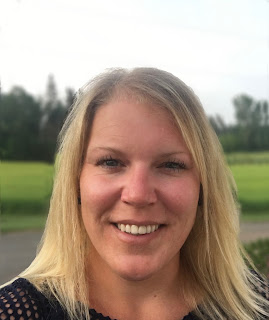
Crystal Cormier, VP of Operations at Natures Crops International.
What are some recent innovations your company is most proud of?
Ahiflower oil is the richest, non-GMO plant-based source of omega 3-6-9 oil currently available and is clinically proven to be up to 4 times more effective than flaxseed oil. Every acre of regeneratively grown Ahiflower produces as much omega-rich oil as 500,000 anchovies.
What do you think will be the biggest challenges for your company next year?
As Natures Crops International continues to grow, the biggest challenge we will face is the need to fulfill all vacant positions at our oilseed processing facility and refinery in PEI, Canada.
Why is Corporate Membership important to your organization?
AOCS corporate membership is important to Natures Crops International because it provides valuable networking opportunities, access to industry expertise and resources, and the ability to collaborate with other companies and organizations in the field of oils, fats, and lipids. Being a part of AOCS enhances Natures Crops International’s credibility visibility, and ability to meet customer demands by staying at the forefront of industry trends and innovation.

.bmp)